How Modern Service Models Reduce Downtime
 Print
PrintThe geographical distance between data center equipment manufacturers and the facilities they support has rapidly grown as the industry moved from traditional hubs into emerging markets. This global expansion has exposed a major flaw in existing service models. Break-fix lead timelines for replacing faulty components – typically 40-50 weeks for electrical equipment – have become too long for businesses where uptime and reliability are a core part of their value proposition.
For decades, the industry has relied on this approach. When a generator failed or a piece of switchgear malfunctioned, a service call was placed and a technician dispatched. The only other hope was that any scheduled calendar visits by the vendor would catch an issue before it became a problem.
In today’s world of AI factories and enterprise data centers, neither of these options are adequate for the demands of the industry. According to the Uptime Institute's Global Data Center Survey 2025, 50% of data centers experienced at least one impactful outage in the previous three years, which explains why the ability to avoid such disruption is becoming a major differentiator.
More Targeted Maintenance
Targeted maintenance combined with increasingly advanced equipment can significantly reduce both the support costs and the risk of downtime. An example from the data center industry is the monthly load testing of back-up generators, an important maintenance procedure that avoids the problem of wet stacking.
Wet stacking occurs when generators operate under light or no-load conditions for extended periods. Combustion is incomplete and unburned fuel and carbon accumulate in the exhaust system, cylinders, and turbocharger, causing reduced efficiency and carbon buildup. Over time, the generator will be at an increased risk of failure during a power outage, when it is needed most.
In a standard maintenance schedule, there would be a one-hour loaded test every month, simulating real building demand on a generator without needing the actual building load to be present.
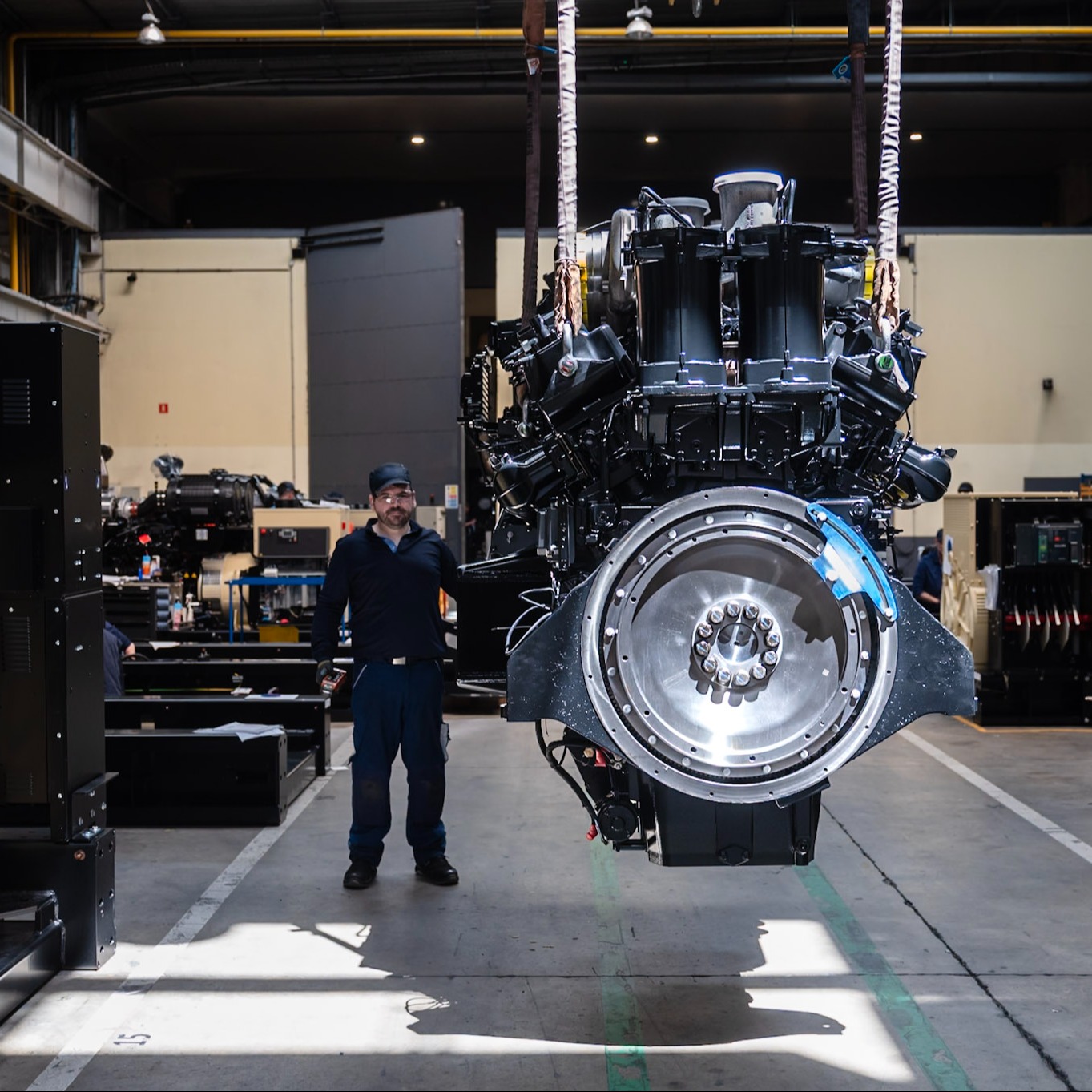
With Rehlko’s Conscious Care program, this process has been radically improved thanks to advances in our KD Series backup generators. Better fuel injection control, electronic engine management, and improved combustion chamber design ensure that there's no significant unburned fuel left over to accumulate in the first place.
Sustainable and Cost-Effective
Instead of a monthly loaded exercise that takes 30 minutes, a single low load check-up can now be completed in minutes every four months, followed by a full load test once a year. This change will reduce GHG emissions by up to 71% with greater reductions of up to 98% if the annual test uses HVO (Hydrotreated Vegetable Oil) instead of diesel.
There are immediate cost savings from reducing the test set-up times, but the environmental benefits are even more compelling. For example, a 3,250-kilowatt generator running a load banking cycle for 30 minutes each month burns about 1,913 liters of diesel fuel and emits 57.7 kg of pollutants per year. In contrast, performing the same monthly exercise unloaded consumes less than 1,065 liters a year and total pollutant emissions are reduced by 40% on a kilograms-per-year basis.
If this same generator was tested at no load once every four months, and one time annually at full load, it would only consume 550 liters of fuel and emit 70% less total pollutants when compared to a monthly load exercise.
Many facilities conduct load banking according to maintenance procedures that were drawn up years ago and have never been revised. Now, the maintenance protocols within Conscious Care deliver more sustainable, cost-effective maintenance while reducing environmental impact.
Single Point of Contact
Like all the best processes, people are as integral to success as the sophistication of the equipment. A new maintenance model should simplify the human side of support, helping out facility managers who deal with dozens of different vendors, each with complex team hierarchies that make it hard to find the right person to fix a fault.
Rehlko streamlines this by providing a Key Account Service Manager as a single point of contact. This manager is dedicated to the project's entire lifecycle, from engineering and commissioning to aftermarket support. Crucially, they are integrated into a larger global team, ensuring that factory-direct assistance and field service engineers are available whenever – and wherever – a critical issue may arise.
As data centers move further away from traditional service hubs and become more global, addressing the logistical challenge of trying to service and support them is another challenge. It is one thing to offer a maintenance contract; it is another to have the people available to fulfill it in a timely way. Here too Rehlko looks to differentiate, with engineering standards and diagnostic tools that are consistent worldwide, supported by over 800 distributors and 10,000 dealers.
Reaping the Benefits of More Uptime
The adoption of data-driven service models, built on continuous engagement and predictive insight, will deliver tangible benefits for data center owners:
Reduced total cost of ownership: By focusing on better maintenance and timely repairs, operators can extend the lifespan of their equipment and avoid the high costs associated with downtime.
Mitigation of supply chain risk: With lead times for electrical equipment stretching for months, proactive and preventative service models ensure parts are available before they are needed.
Fueling growth: Minimizing the risk of power outages and delayed support removes a major obstacle to scaling operations and entering new markets.
Smart data centers owners are already exercising heightened caution in vendor selection to ensure they are at the forefront of more forward-looking support. The time to abandon an outdated service mindset and adopt a more sophisticated maintenance model is here.
By providing smarter equipment, maintaining a global network of local experts, and assigning dedicated account managers, Rehlko is helping data centers navigate this transition. The shift to more sophisticated maintenance models isn't just a strategy, it's a foundation for future-proof resilience.