Case Study: Emergency Disaster Response Facility
 Print
PrintMassachusetts Emergency Management Authority (MEMA) | Framingham, Mass.
At a Glance
CUSTOMER
Massachusetts Emergency Management Authority (MEMA)
LOCATION
Framingham, Mass.
INDUSTRY
Government
CHALLENGE
Provide standby emergency power for underground civil emergency complex with special genset cooling constraints and limited access.
SOLUTIONS
Two Rehlko 150REOZJ4 generator sets
Rehlko DEC3500 on-board paralleling controller
Note: The products shown were installed under the KOHLER brand.
Background
The Massachusetts Emergency Management Agency (MEMA) is a Commonwealth of Massachusetts agency, headquartered in Framingham. Its emergency operations complex is located in a one-acre, underground, Cold War-era bunker with two-foot-thick reinforced concrete walls and ceiling. Massachusetts was the first state in the nation to have an underground blast-proof State Emergency Operations Center.
During the early 1960s, President John Kennedy devised a plan for each state to have this type of facility to ensure continuity of state government following a nuclear attack. It is now used to provide Massachusetts residents and visitors emergency preparedness resources, emergency alerts, and information during and after emergencies and disasters. MEMA coordinates with federal, state, and local government agencies, nonprofit organizations, and businesses to prepare, respond, and recover from emergencies and disasters. The complex also serves as a crisis-response center, coordinating all the emergency services for the region. Most recently, the site has been instrumental in coordinating the state’s response to COVID-19.
Challenge
Under the auspices of the Department of Capital Asset Management and Maintenance (DCAMM), the state of Massachusetts aimed to update its emergency facilities with Tier 4 Final generators. The previous units in the emergency operations center were oversized and did not feature the latest Green technology.
The challenge for Ecosystem’s project manager Jérémie Lavoie-Doyon and Kraft Power Corporation’s CHP sales manager, David Barstow, was to remove and replace two aging 250 kW diesel generators despite limited access—a maintenance hatch that had been permanently blocked 20 years earlier during an upgrade. The third, nonfunctional unit was simply left in place. DCAMM also wanted a responsible (Green) approach in terms of efficiency and impact.
Implementation
Complex projects with space constraints and permanent architecture often dictate the solution. In this case, access to the underground powerhouse required traversing office space, narrow corridors, and steel-plated blast doors 82" high, 76" wide, and 9" thick. At 5,695 pounds, removing these doors to facilitate generator removal and installation was problematic. Two of the existing three generators were disassembled and broken up to create space for the new system.
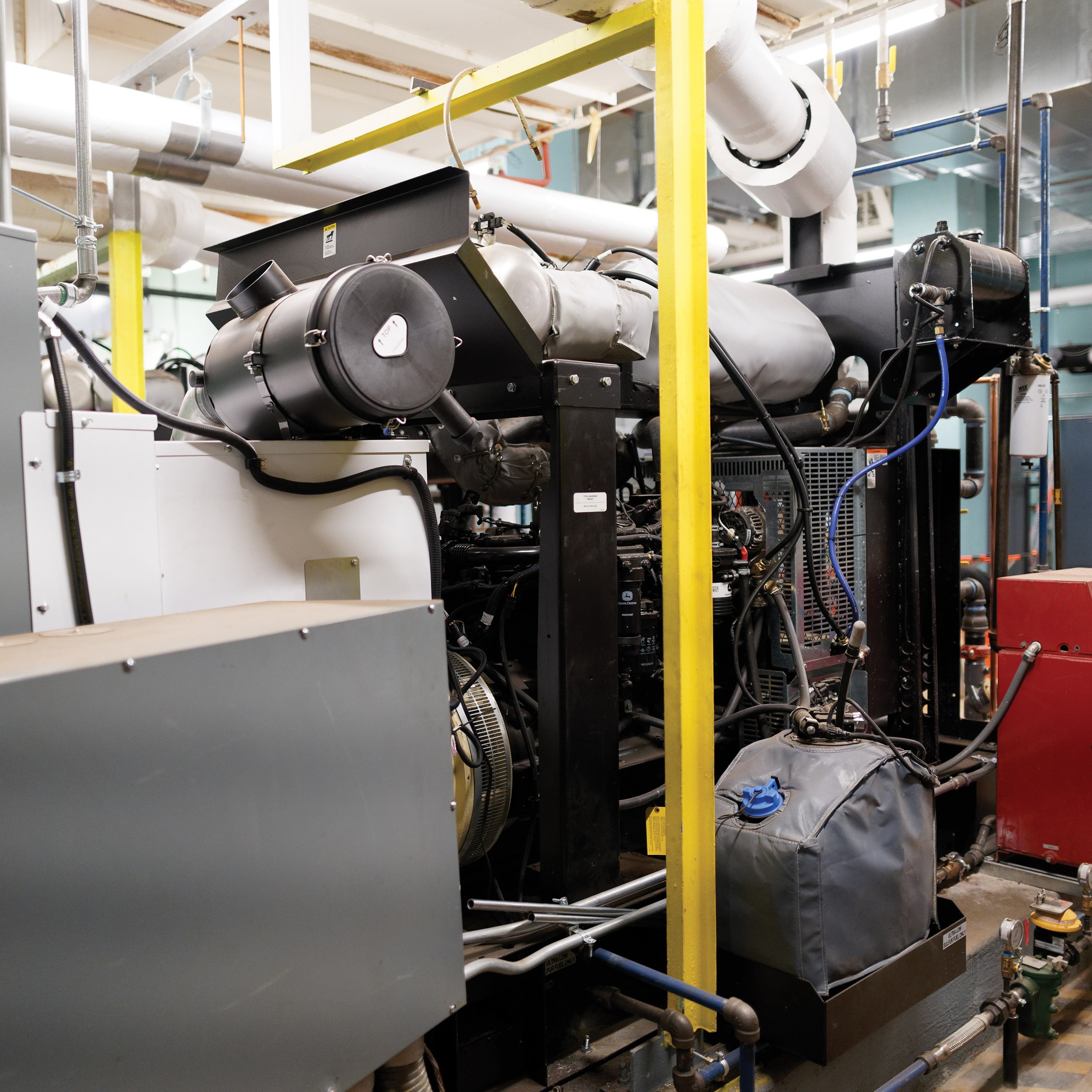
The new Rehlko units were designed for easy disassembly and reassembly on site to overcome access and rigging challenges. MEMA also required minimal noise and heat near office spaces. The system needed to utilize existing HVAC condensation for engine block and intercooler cooling—i.e., heat-exchanger cooling.
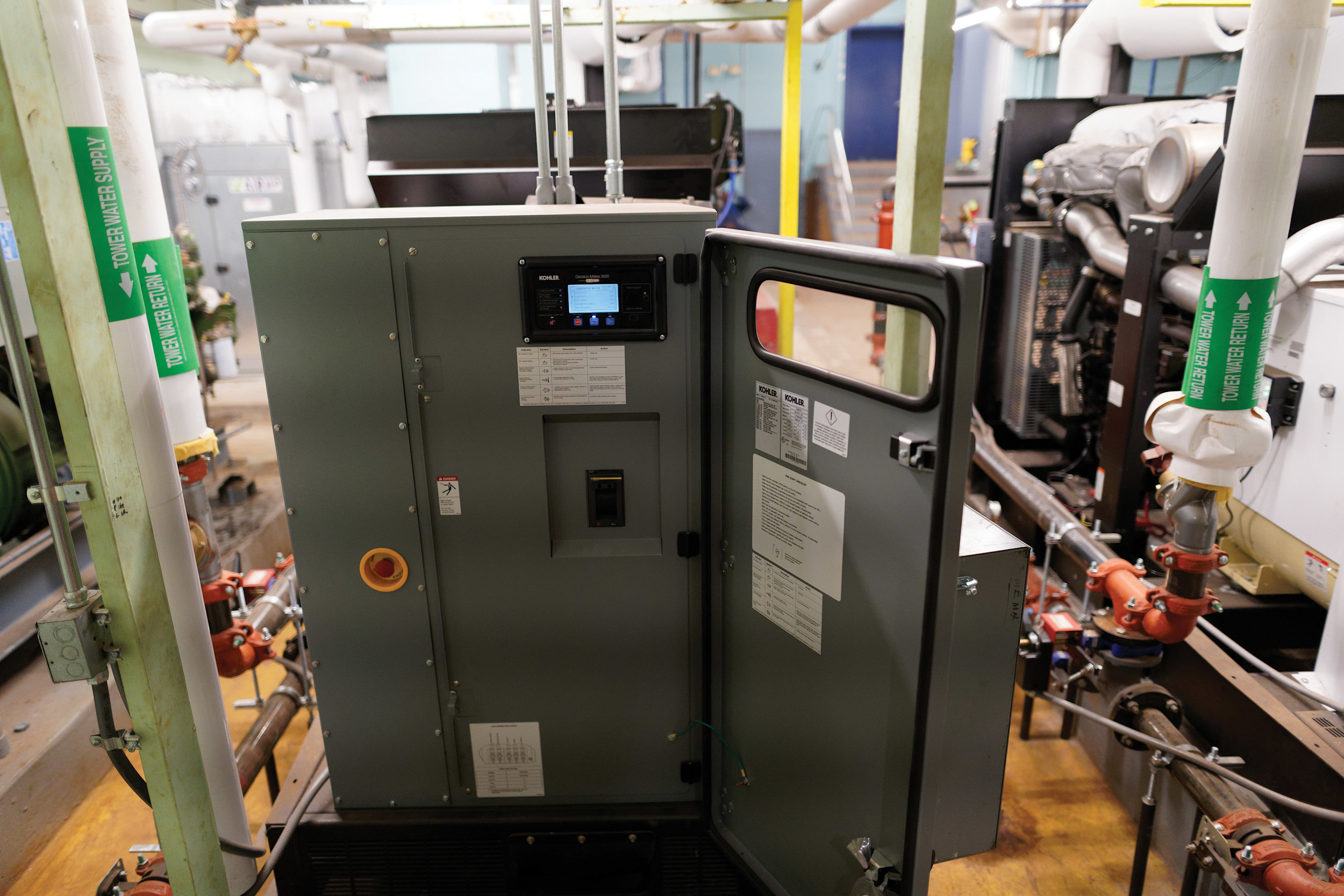
Rehlko DEC3500 on-board paralleling controller
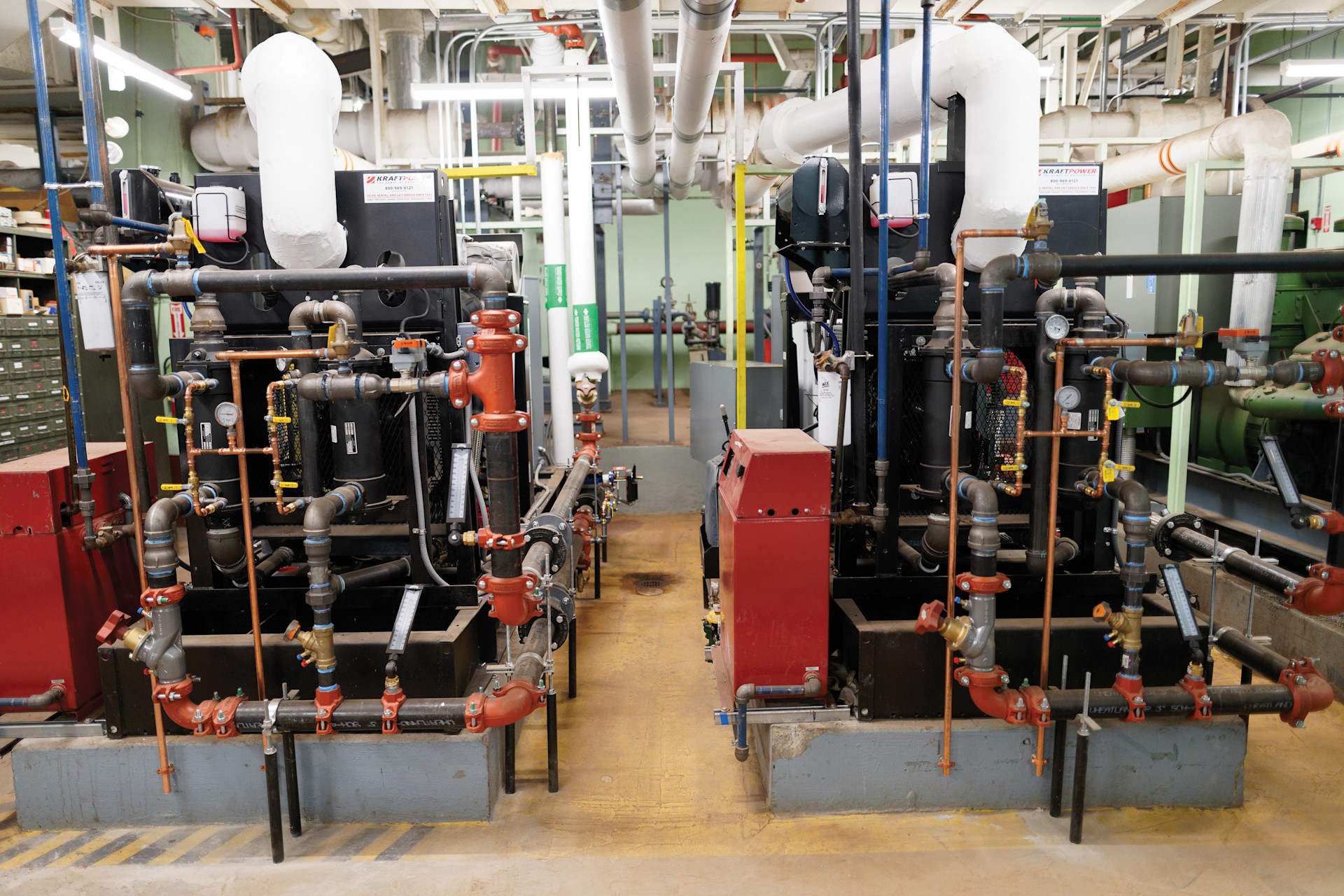
Rehlko 150 kW generators in the MEMA complex
Solution
Kraft Power recommended two Rehlko 150REOZJ4 Tier 4 Final-certified, 60 Hz generators. Each diesel-powered unit delivers a 106–154 kW standby rating and features a brushless, permanent-magnet alternator for superior short-circuit capability. Vacuum-impregnated windings with fungus-resistant epoxy varnish enhance dependability and long life.
“In the Cold War era, they oversized everything,” said Ecosystem’s Jérémie Lavoie-Doyon. “In this case, the facility was equipped with three 250 kW diesel generators, providing triple-redundant auxiliary power. They were really inefficient in terms of operating expense and maintenance costs—plus they featured Tier 2 technology at best. One of these highly efficient, Tier 4 Final-certified Rehlko gen sets provides the facility with all the power it needs, plus redundancy. It is also a greener solution.”
Kraft Power received the two standard radiator-cooled Rehlko generators and converted them to heat-exchanger cooling, using 85°F water from the cooling tower to cool the engine. A temperature-control circuit with a control valve maintains the engine’s intercooler at 126°F.
Kraft Power technicians disassembled the old generators, reassembled the converted Rehlko units on site, and installed them in the bunker’s powerhouse. They also reworked the control field wiring and re-engineered the switchgear, keeping the existing paralleling and distribution circuit breakers. The Rehlko DEC3500 Decision-Maker® paralleling controller manages switchboard distribution and protects the generator against instant overload.
The MEMA emergency operations facility solution features:
Two Rehlko 150REOZJ4 diesel generators with DEC3500 paralleling controllers, delivering Tier 4 Final emergency power in a compact, heat-exchanger-cooled configuration.
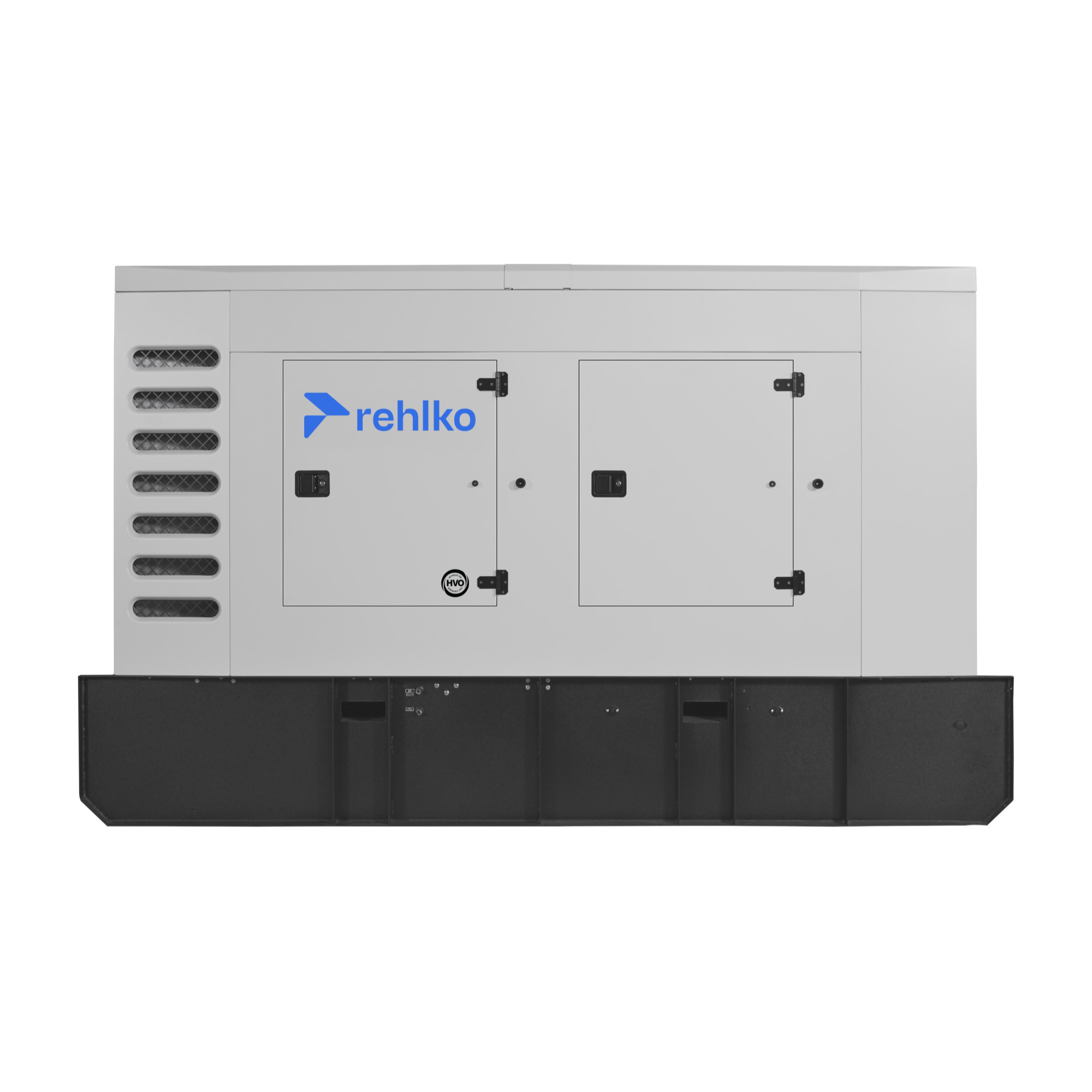
150REOZJ4
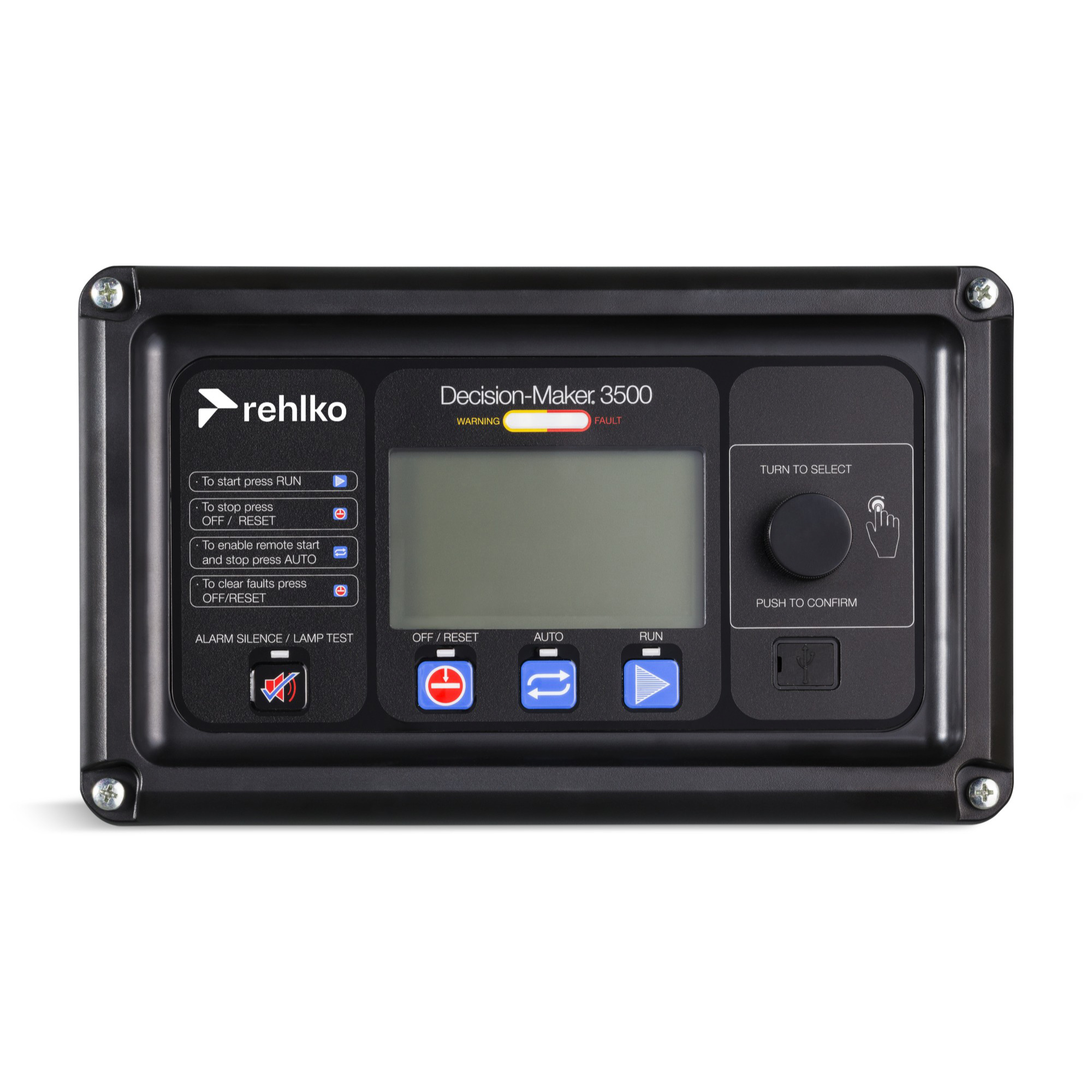
DEC3500
Results
According to Dave Barstow, “The project has been a great success. The controls have been set up so that on a call from either or both transfer switches, both units start to come up to speed and accept the emergency load. The load pickup and drop have been tuned so that a single unit never carries more than 87 percent of its rated load, at which point the second unit is added.”
The Kraft Power service team continues to inspect and tweak the system to ensure reliability, service life, and overall customer satisfaction.
“This was a highly complex project with a number of hurdles, given we had to work within the confines and limitations imposed by a unique, monolithic structure. The installation, testing, and commissioning speed, not to mention the workmanship involved, serve as a testament to the cohesiveness of an amazing team.” — Dave Barstow
*Rehlko is a global leader in energy resilience delivering innovative energy solutions critical to sustain and improve life across home energy, industrial energy systems, and powertrain technologies, by delivering control, resilience and innovation.
Case Study
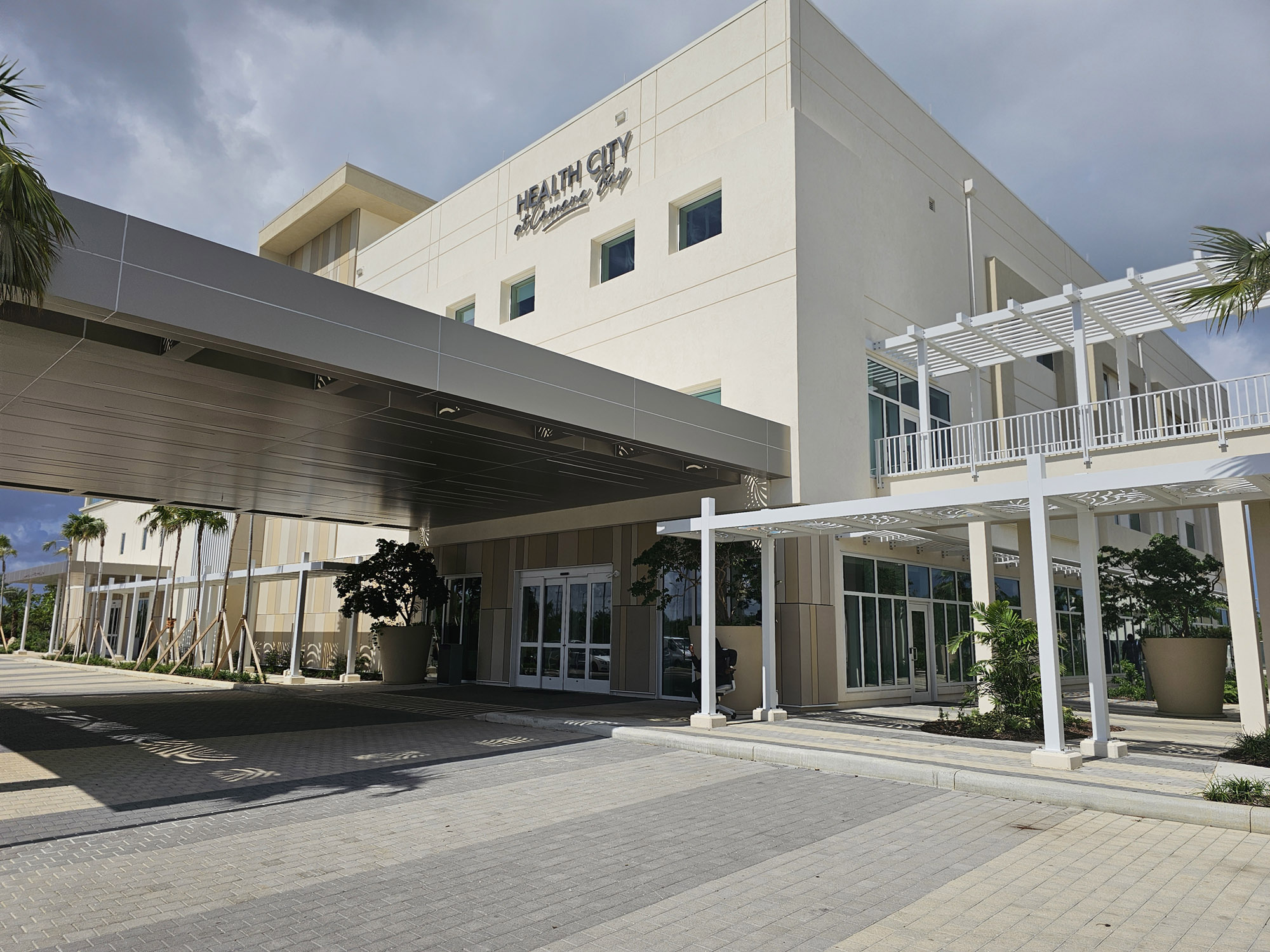
Healthcare
Rehlko provided a backup power system to protect critical equipment and maintain essential healthcare services during utility disruptions.
Case Study
Education
Learn why this university in Kansas trusts in a Rehlko Power System.