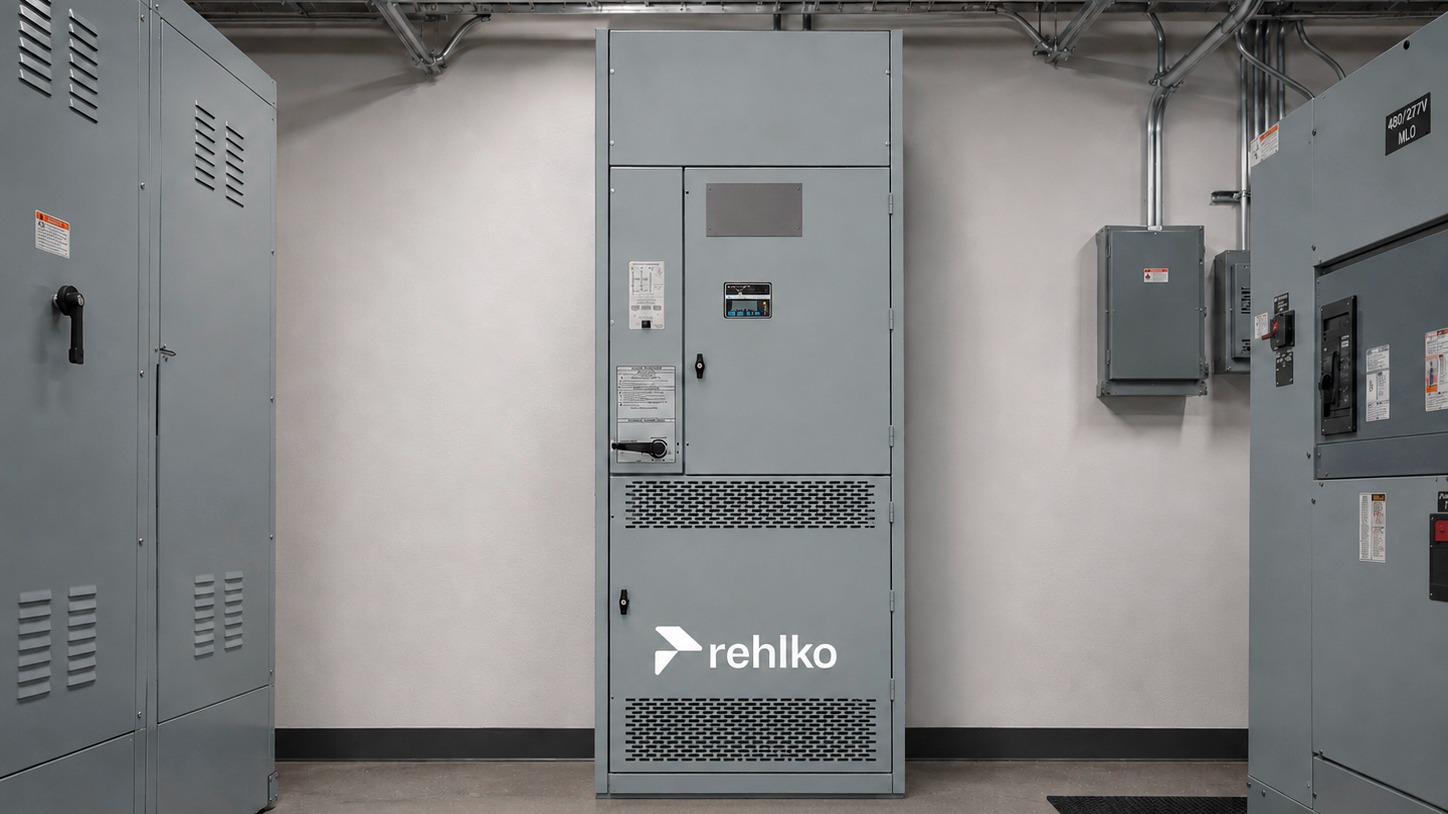
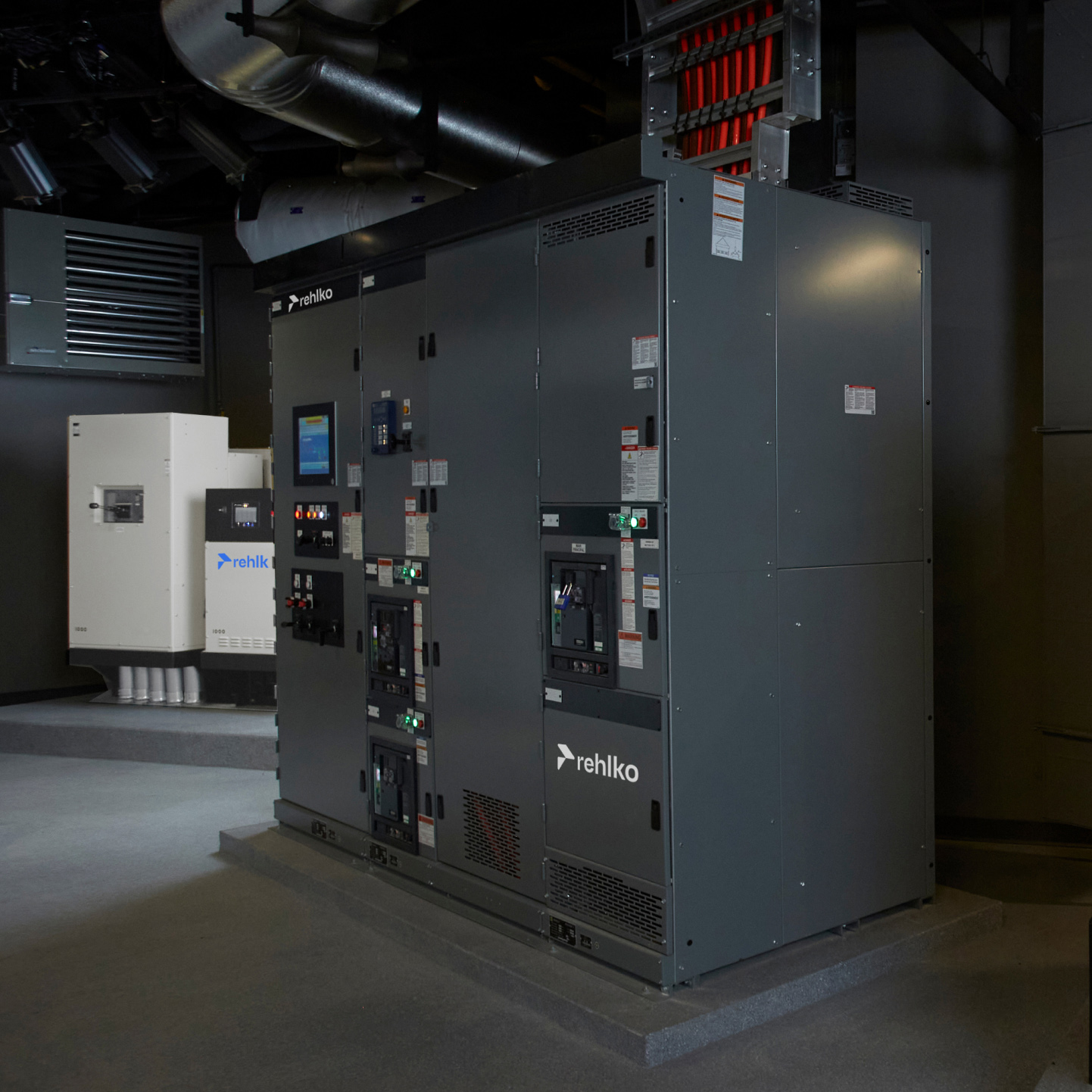
ATS: The Unsung Hero of Resilient Power Systems
 Print
PrintChoosing the right ATS
Automatic transfer switches (ATS) are essential to maintaining continuous power—make sure your mission-critical facility has the right one in place.
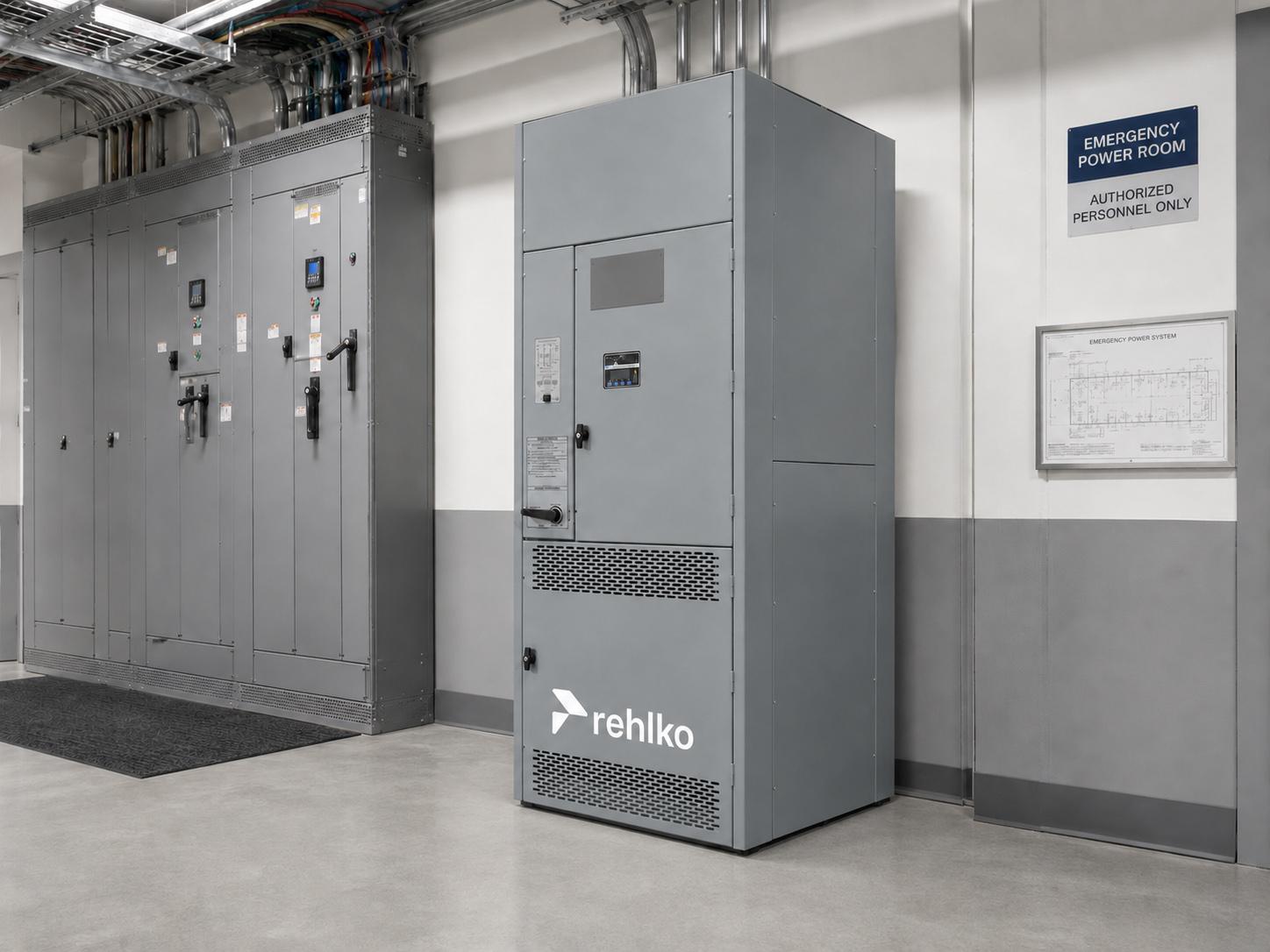
Resilient power systems are the sum of many parts.
When the grid goes down, business continuity is ensured by the seamless operation of a series of often-overlooked technologies that work in perfect synchronization behind the scenes.
Automatic transfer switches (ATS) are part of this equation. These critical components play a significant role in industrial power systems. By detecting power loss from the utility source and automatically switching the load to an emergency power source, typically a generator, ATS minimize downtime and protect sensitive equipment.
Once utility power is restored, the ATS switches the load back to the primary source. They are designed to distribute power to critical loads when it matters most.
Different types of ATS
However, not all ATS are the same. There are several transition modes available, providing plenty of options for different power architectures.
The result is flexibility, with engineers matching the transfer strategy to the specific risk profile of the application. This might vary from mission-critical environments to more cost-sensitive installations.
Here are three of the most common transition modes used across modern power systems:
Standard/open (break-before-make): Open transition disconnects the load before switching sources, suitable for non-critical loads.
Delayed/programmed: Delayed transition introduces a customer-programmable pause in a center ‘off’ position to allow electromagnetic fields to decay, ideal for large inductive loads.
Closed (make-before-break): A closed transition maintains power during transfer by paralleling both sources for a brief period (less than 100msec).
Choosing the right ATS
With such a wide range of configurations and applications, selecting the right components for an ATS supports effective system design. With thousands of possible configurations, choosing the right combination of mechanism, transition mode, and control strategy is essential to achieving the desired performance.
When specifying an ATS, Rehlko Authorized Distributor engineers will evaluate the amperage rating, voltage compatibility, and transition type, while considering parameters such as neutral switching, withstand and close-on ratings, and enclosure types. Other parameters include load management features, communication protocols, seismic certification, and available accessories such as input/output modules, alarm modules, current sensing, surge protection, and digital meters.
An important consideration when choosing an ATS is its withstand and close-on rating (WCR). This defines the switch’s ability to safely handle fault currents during abnormal operating conditions until protective devices clear the fault. Selecting the correct rating helps protect equipment, supports system reliability, and ensure proper coordination with breakers and fuses.
Typical ATS applications
Whatever the configuration, ATS systems are installed across many industrial sectors where power continuity is vital. Three main application types stand out:
Life Safety: Often installed in places like hospitals and intensive care units, where continuous operation is vital. Life safety ATS typically encompasses bypass-isolation with a closed transition. ATS for these applications often meet standards such as UL 1008 (Standard for Automatic Transfer Switches for Use in Emergency Standby Systems), and CSA C22.2 No. 178. They are also governed by NFPA 70 (National Electric Code) and NFPA 99 (Essential Systems for Health Care Facilities).
Mission Critical: These applications are often found in data centers, telecom hubs, and banks. These places require redundant, continuous power to maintain 24/7 uptime for equipment such as servers and communication/cloud infrastructure. Load shedding and load prioritization during emergencies represent key performance requirements, supporting Tier III and Tier IV data center standards for fault tolerance and concurrent maintainability. Closed-transition configurations are most common in this segment, either as bypass isolation or standard, depending on customer needs.
Standard: Most ATS applications fall into this segment, serving locations such as offices, shopping centers, and manufacturing plants. In this segment, both standard/open and programmed/delayed transitions are common configurations, selected based on load characteristics and site requirements. This segment provides reliable and cost-effective backup power during outages, where short power interruptions are acceptable. It is the most straightforward implementation, but different accessories and options can customize a switch to meet the exact job requirements.
Why ATS is critical for resilience
To conclude, automatic transfer switches are indispensable in maintaining power continuity and protecting industrial operations from outages.
Rehlko offers a full portfolio of ATS solutions, provided as part of an overall power system design. By focusing on every element – from ATS and generator, through to switchgear, and controller – our technologies are designed to integrate seamlessly and deliver the highest levels of performance.
From specification to startup and service, Rehlko Authorized Distributors offer end-to-end service across the lifecycle. These highly knowledgeable partners work directly with customers to configure and integrate ATS into complete power system designs for each application.
With global support in place, that means all organizations can deploy resilient, efficient power systems that perform when it matters most.