NFPA 110: Why It Matters for Backup Power
 Print
PrintUnderstanding NFPA 110
Learn how your nearest Rehlko Authorized Distributor can help you navigate NFPA 110 and support continuity of life-safety-critical loads.

For facility managers and other similar professionals, it’s the moment they fear most.
The grid goes down, main power fails, and business continuity is under threat.
Worse still, in places like hospitals and nursing homes, if emergency and standby power systems fail to operate safely and reliably, lives could be put at risk.
That’s why the National Fire Protection Association 110 (NFPA 110) standard is so important. It sets out requirements to ensure continuity of life-safety-critical loads in emergencies and the tests required to demonstrate compliance.
Through adherence to NFPA 110, end users know they can rely on dependable power when failure isn’t an option.
Why NFPA 110 matters
So, let’s look at NFPA 110 in more detail to understand its importance in mission-critical applications.
The standard defines the overall performance requirements for emergency and standby power systems. Individual products cannot be marked as NFPA 110-compliant; it is the overall power system that must be installed, maintained, tested, and operated in accordance with the NFPA standard to be compliant.
NFPA 110 includes a risk-based classification system. It identifies two levels of requirements relating to installation, performance and maintenance:
Level 1 pertains to power systems where failure to perform could result in loss of life or serious injury.
Level 2 pertains to power systems where failure to perform is less critical to human life and safety.
For generator operators, that’s an important distinction because it defines the level of risk a system must be built to handle, and the consequences if it doesn’t.
Typically, the Authority Having Jurisdiction (AHJ) is responsible for enforcing code compliance in a particular city or region. It is the AHJ that confirms the required level, and then the power system is designed accordingly.
Designing systems for NFPA 110 compliance
While no single product can be NFPA 110 compliant, there is no doubt that every component in the system plays an important role in achieving overall compliance. These technologies represent the important foundations for emergency and standby power systems to meet the standard.
Rehlko provides a range of products engineered to support NFPA 110 requirements. This includes generators, transfer switches, controllers, and monitoring systems. These solutions support dependable power continuity across healthcare, commercial, and industrial environments.
Let’s map some of these critical systems and components to the NFPA 110 requirements:
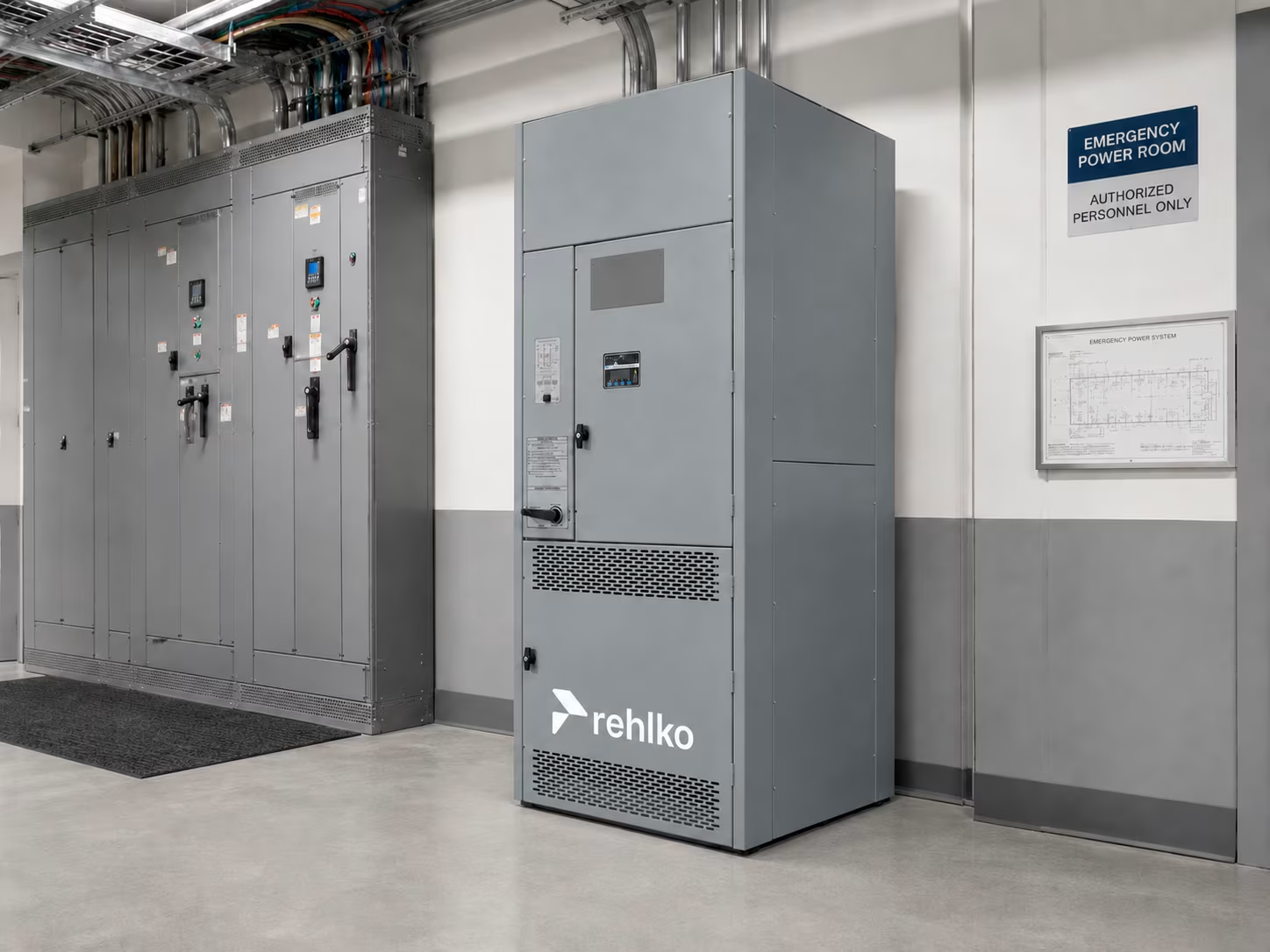
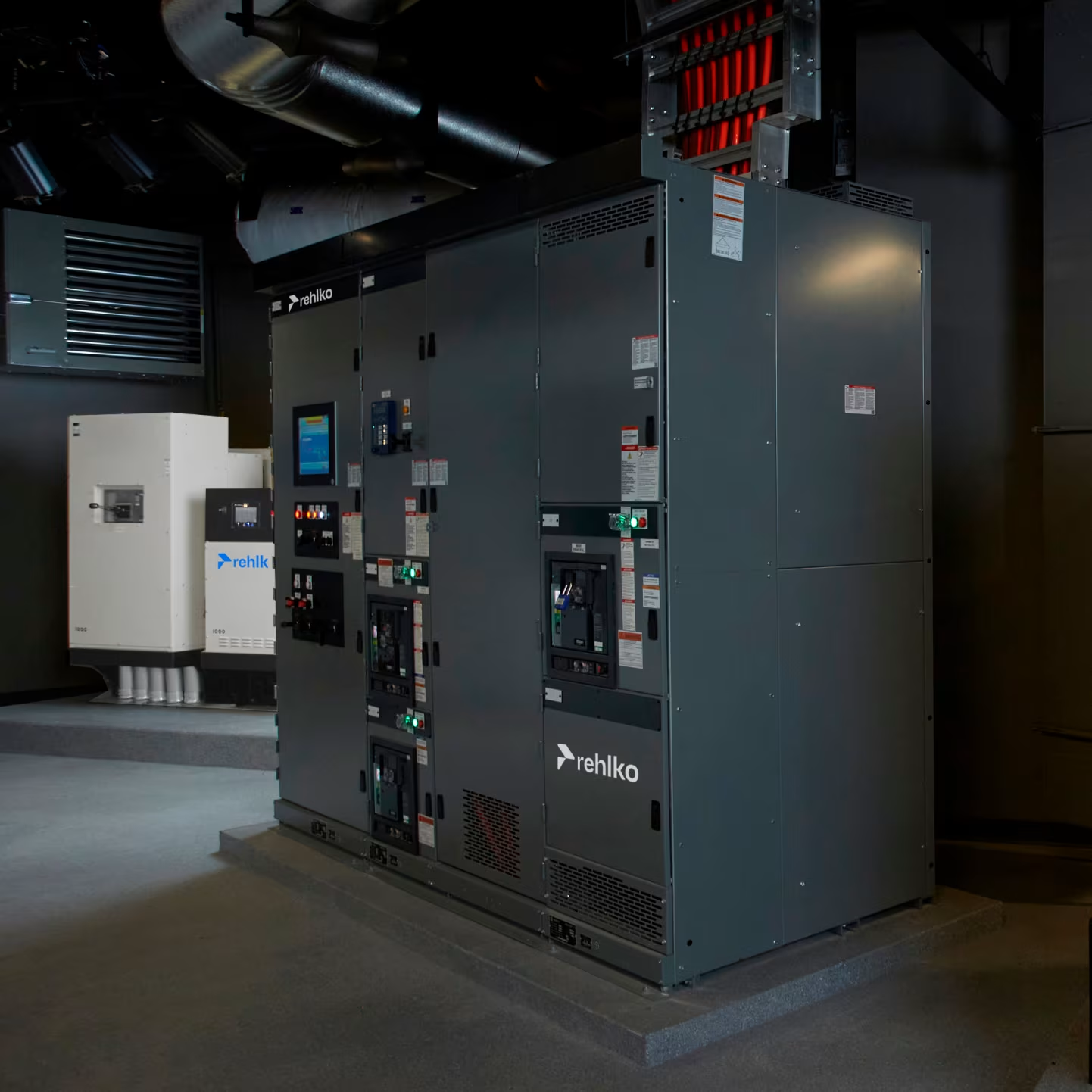
Generators and transfer switches: NFPA 110 requirements cover functions such as mounting, cooling, starting, load switching and voltage regulation. Generators and automatic transfer switches can be designed to meet NFPA 110 when equipped with the required accessories, ensuring power is transferred quickly and consistently when the primary supply fails.
Fuel tanks: The standard defines class based on required runtime for the power system at its rated load without refuelling. This allocation, typically measured in hours, ensures sufficient runtime to support critical operations during a grid outage.
Controllers: Controllers can be designed to meet NFPA 110 through features such as emergency stop, stop/run/auto controls, audible horn, visual fault indicators, and system status monitoring displayed on both the controller and remote annunciator. This information provides operators with the visibility and control needed to respond quickly in critical situations.
Remote serial annunciators: NFPA 110 Level 1 dictates that specific generator conditions must be annunciated at a continuously staffed location during operation, ensuring that any faults or changes in system status are immediately visible. Remote serial annunciators can incorporate data from automatic transfer switch, enabling faster diagnosis and response. Annunciating the ATS provides the status of the power sources and the switch position and allows remote testing of the generator.
Battery chargers: The standard dictates requirements for charging batteries within a certain period. The battery charger must also monitor the output voltage and current and, under certain classifications, be required to indicate low or high battery voltage. These requirements help prevent failure at startup.
Each of these technologies can be designed to help a system achieve compliance when used correctly. But NFPA 110 goes further than that. It requires the entire power system to be installed, maintained, tested, and operated in accordance with the standard.
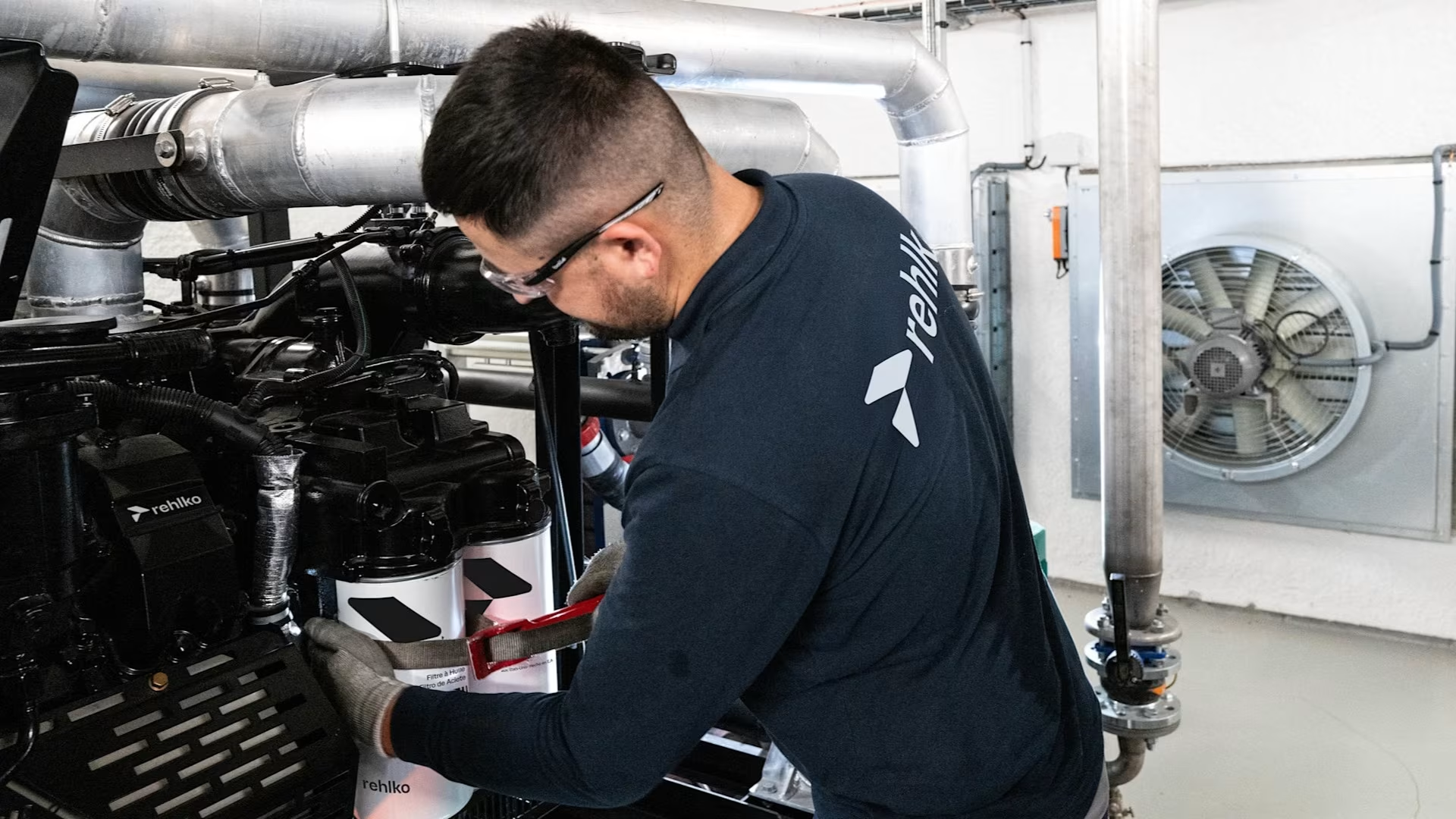
Location and environmental considerations for installation are therefore covered by NFPA 110, while diligent maintenance of a building’s emergency power supply system, including regular inspections and load tests, must also be conducted.
Helping navigate NFPA 110
In conclusion, NFPA 110 requires a system-level overview, ongoing technical assessment, and continued risk mitigation.
Failure to adhere to the standard means operators of emergency and standby power components run the risk of disrupting critical loads.
Rehlko is committed to designing emergency and standby power components that ensure the power system complies with NFPA 110. We have extensive experience supporting mission-critical applications worldwide, including healthcare environments where dependable standby power is essential to patient safety and operational continuity.
And Rehlko’s Authorized Distributors can offer advice on installing and maintaining power systems throughout their lifecycle – ensuring they operate safely and reliably over the long term.