Understanding the Benefits of Paralleled Standby Generators
 Print
PrintHow paralleled generators can increase operational flexibility and support uptime
Learn how Rehlko's paralleled generators provide a flexible, resilient power system architecture with clear operational benefits.
In mission-critical facilities such as data centers and hospitals, power system design directly impacts uptime, operating cost, and long-term scalability.
However, one-size-fits-all power solutions rarely deliver the desired levels of resilience or efficiency. Customized approaches, on the other hand, allow capacity, redundancy, and load management to be precisely matched to operational demands.
Generator paralleling is one way to optimize power system performance and better meet the unique requirements of any given application. This approach provides a more flexible and resilient architecture with clear operational benefits.
Realizing these benefits depends on careful consideration of key equipment. Generators, switchgear, and control systems should be specified and integrated as part of a cohesive, end-to-end design, ensuring backup power systems work consistently when it matters most.
How generator paralleling works
So, let’s look at generator paralleling in more detail to better understand the real-world advantages it can offer.
With the commercial availability of standby gas or diesel generators rated up to 4000 kW or more, many facilities install a single large generator set to supply all necessary power in the event of a utility outage.
However, in a number of standby and emergency power applications, there are benefits to sharing the total load among multiple smaller generator sets connected in parallel to maximize system reliability, availability, fuel economy and operational flexibility.
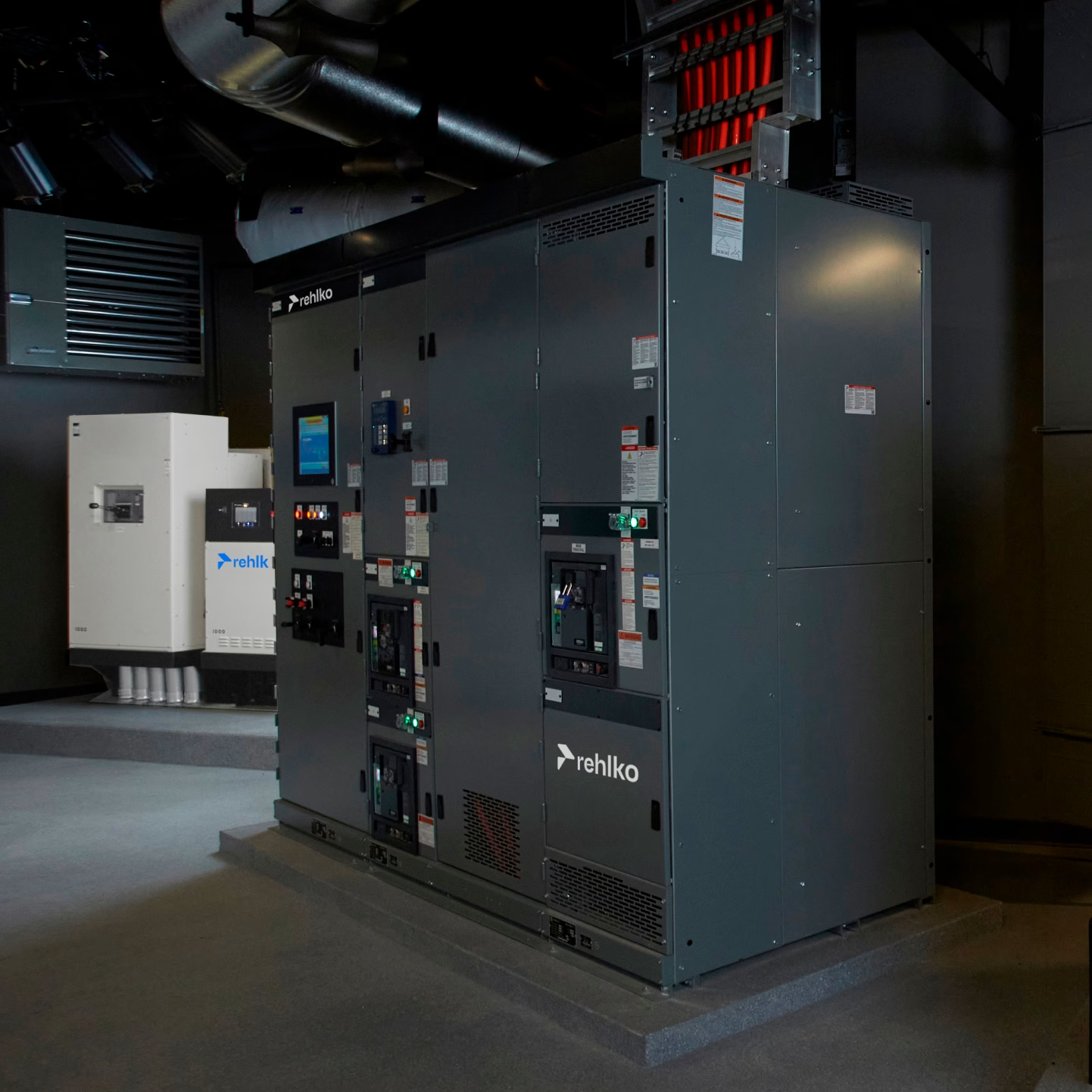
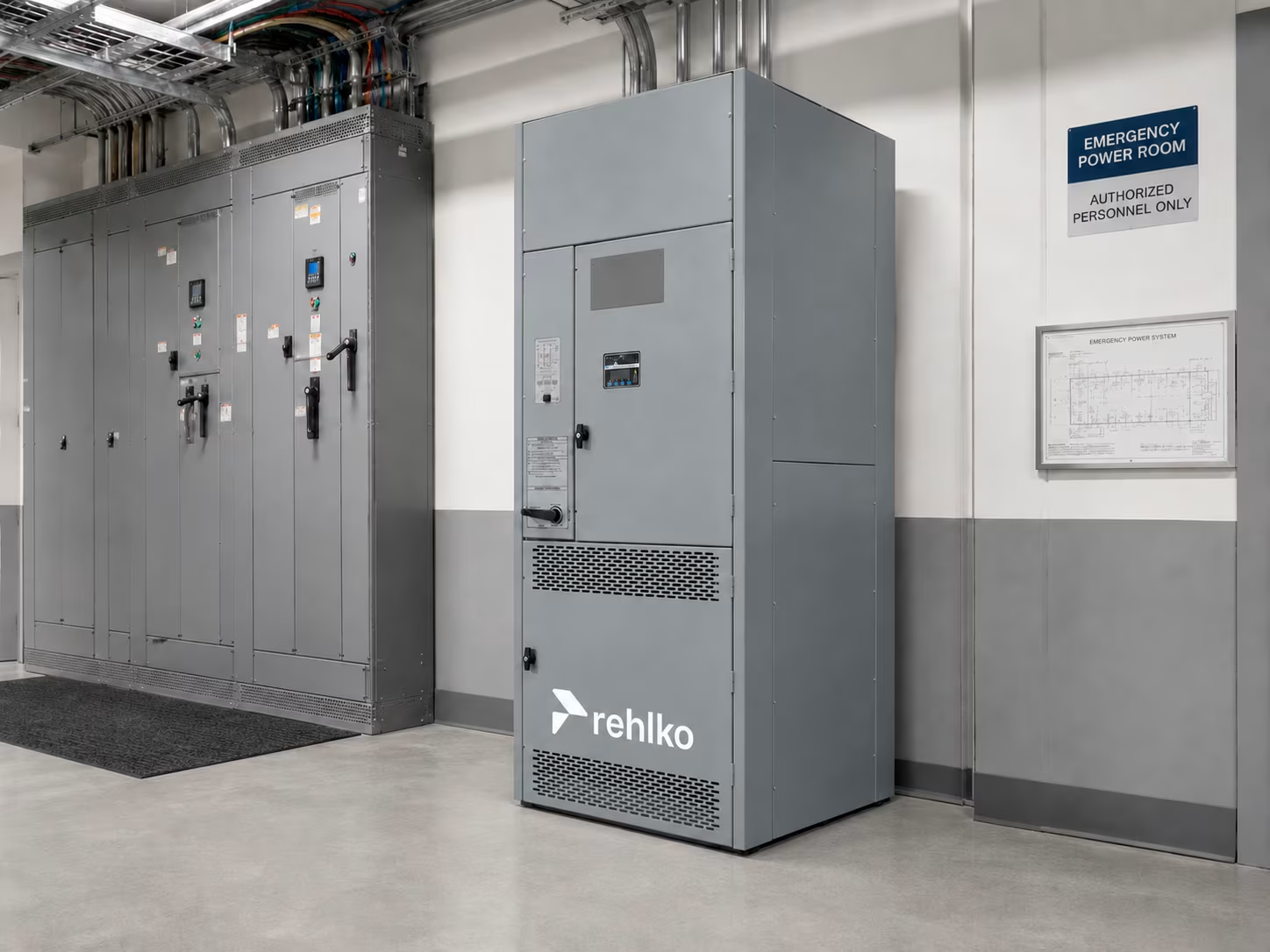
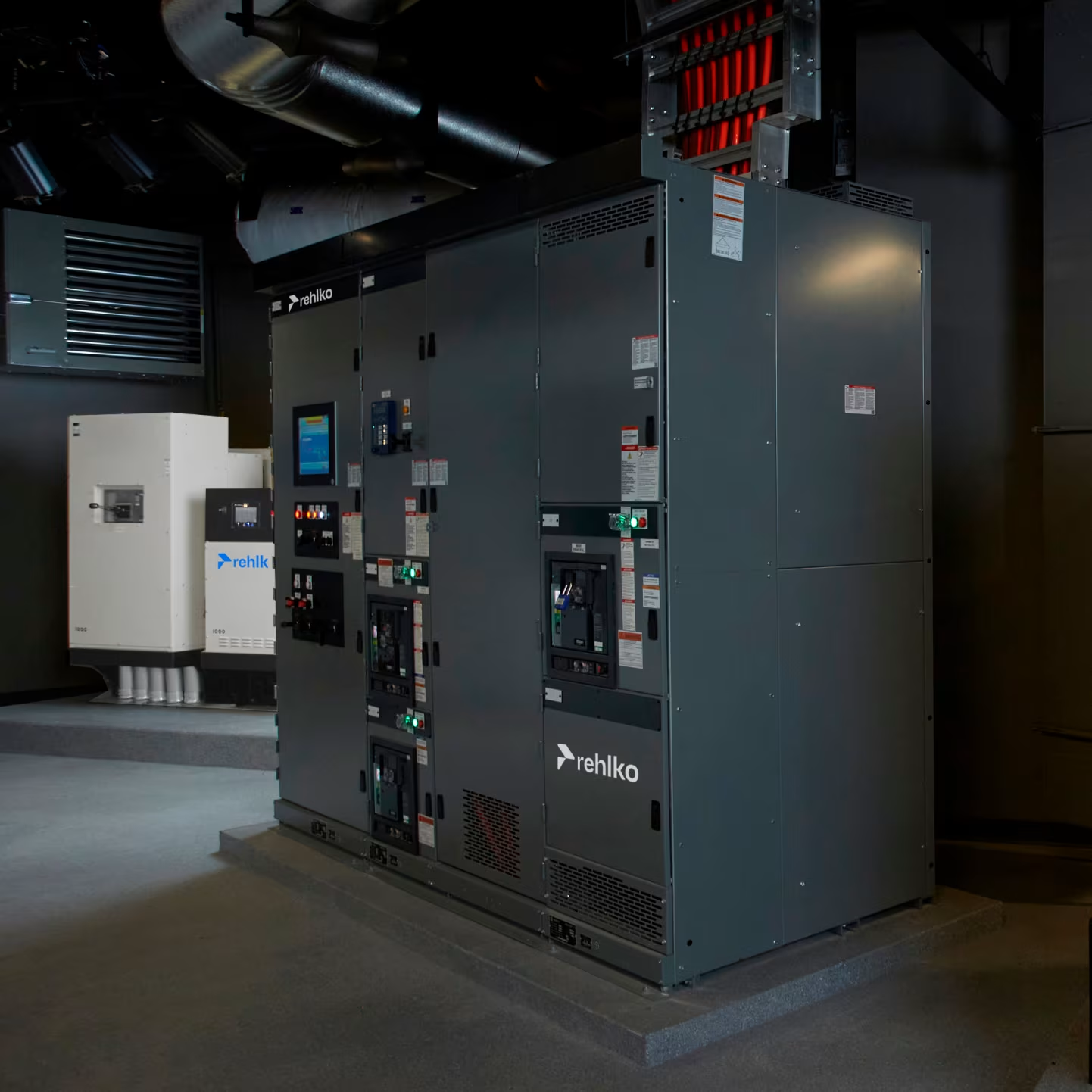
A standby power system with two generator sets and prioritized loads represents a common approach to paralleling. In such an installation, the generators must be synchronized in voltage, frequency and phase before load sharing, ensuring stable and safe operation. Paralleling switchgear provides the centralized connection point and protection needed to operate the generators together, while controls manage synchronization and load sharing.
Meanwhile, generator-mounted breakers are dedicated to protecting the generator set and can be integrated with alternator protection and other protective devices within the generator set controller. The incoming lines from the generator sets are protected at the switchgear with a service breaker, which is used for synchronization and bus-level fault protection. These breakers are sized to accommodate the total fault capacity of the bus with all generators online and to protect the cables from the generators.
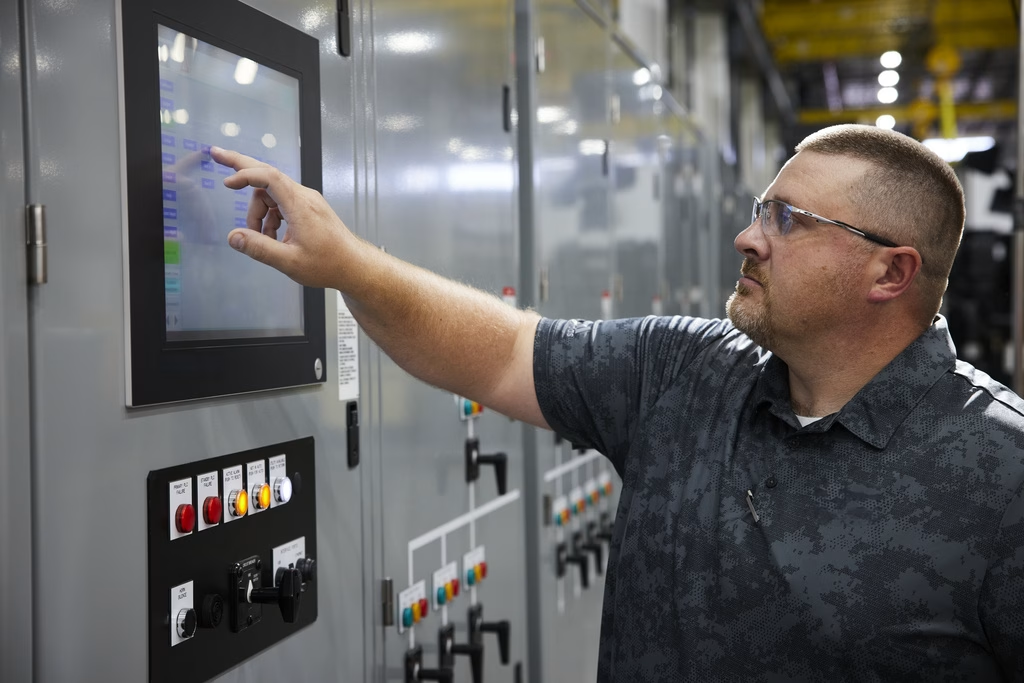
Advances in digital control technology have simplified paralleling, reducing most of the operational complexities of older analog systems. Digital paralleling controls offer user-friendly touchscreen human-machine interfaces, along with insightful data such as trending reports and alarm and event recording.
The benefits of generator paralleling
There are many reasons to consider generator paralleling. There might be future plant or building expansion in the pipeline, resulting in increased electrical demand and load growth. Or there could be a strong desire to reduce downtime during scheduled upgrades or maintenance.
Whatever the reasons, there are some distinct advantages to deploying smaller, paralleled generators rather than a single large generator set. These can be grouped in several key areas:
Reliability and availability: In the unlikely event that one standby generator does not start when needed, the other will start and supply the critical load by shedding less-critical loads.
Operational flexibility: A standby power system with multiple generators means end users can stage units on/off to match demand. This approach offers operational flexibility that can increase reliability, reduce operating costs, and enhance operator convenience.
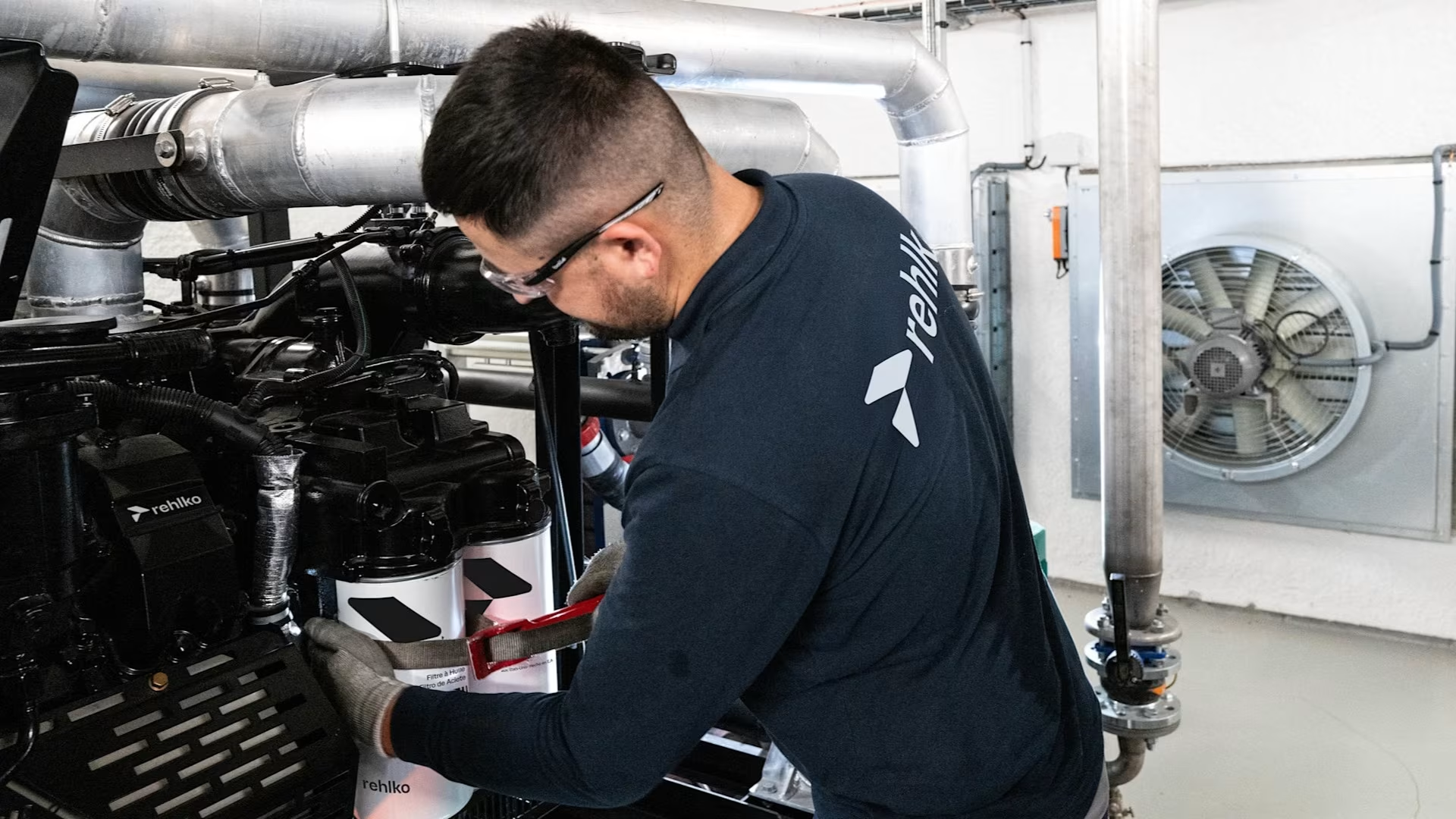
Easier maintenance: With a single large generator set, the standby power system is unavailable while undergoing routine or unscheduled maintenance. In a two-generator paralleled system, the generator set that remains online is available to supply critical loads and, when properly sized, some portion of noncritical loads. Maintenance scheduling can be easier with multiple generator-set systems.
Energy cost savings: When configured to run in parallel with the local utility, these power systems can take advantage of utility-interruptible rate programs offered by many service providers. These programs give a credit on the electric bill for allowing the utility to interrupt power to the facility during periods of peak demand – meaning the end user can earn bill credits and significantly reduce overall electricity costs.
Avoiding partially loaded generator sets: If the facility has an electrical load that varies based on the time of day or day of the week, a standby power system with multiple generators allows for running one or two units at certain times rather than the less fuel-efficient method of running a lightly loaded large generator set.
Faster system expansion: If the facility's electrical needs are expected to grow over time, the multiple-generator approach allows incremental capacity increases by adding supplemental generator sets.
Why integration matters
Rehlko’s integration of onboard paralleling within their generator controller streamlines power management by embedding advanced synchronization and load-sharing capabilities directly into the control platform. This eliminates the need for external paralleling gear or complex third-party systems, reducing installation time, footprint, and overall system cost.
With onboard paralleling, multiple generator sets can be seamlessly synchronized and managed in real time, optimizing load distribution, improving fuel efficiency, and enhancing system reliability. The controller continuously monitors key parameters such as voltage, frequency, and phase alignment, allowing for smooth transitions during startup, load changes, and generator sequencing. This integrated approach simplifies commissioning and provides operators with a unified interface for monitoring, diagnostics, and control, ultimately delivering a more efficient and resilient power solution.
To achieve this level of integration, the best approach is to work with a single-source specialist that fully understands your needs. Rehlko provides integrated paralleling solutions, including generators, paralleling switchgear, ATS systems, generator controls, load management systems, and centralized monitoring/control platforms. These solutions are brought together by an authorized distributor network that can provide design, installation, commissioning and after-sales support.
At Rehlko, every design starts with a proven, time-tested process that results in total system integration. No matter how large or complex, everything works together seamlessly. That means your paralleled generator system will perform reliably, whenever you need it most.